Cholesterol & lipids
Checks the fats and lipoproteins that drive cardiovascular risk, plaque build-up and metabolic health.
Get the most complete picture of your health with the Biosensitive® Total Body Health Check-Up Blood Test an advanced, all-in-one assessment designed to analyse every major system in your body.
This test acts as a full human MOT, measuring 58 biomarkers across your heart, liver, kidney, thyroid, hormone, metabolic, and nutritional health. It helps identify early signs of imbalance, inflammation, or deficiency that could impact your energy, mood, metabolism, and long-term wellbeing. Ideal for anyone wanting a proactive, data-driven approach to health, it provides the clarity you need to take informed action before symptoms arise.
Once your results are analysed, our clinical team reviews your profile in detail — offering professional interpretation and personalised guidance to help you optimise your health, performance, and longevity.
Invest in your health with the most comprehensive test we offer — your body, measured and understood with clinical precision.
All items are typically dispatched within 24 hours. 30-day return for unopened and unused product tests and kits.
Click on each biomarker to see what it does and how it can influence your health.
Measures the overall amount of cholesterol in your blood. While cholesterol is essential for hormone production and cell health, high levels can increase cardiovascular risk. This marker gives an overview of your lipid balance and helps guide whether further improvement is needed.
Often called “good cholesterol,” HDL helps remove excess cholesterol from your arteries. Higher levels are generally protective for heart health. Low HDL may signal increased cardiovascular risk or lifestyle factors that need support.
This represents all forms of cholesterol considered potentially harmful, including LDL and VLDL. It is a strong predictor of cardiovascular risk. Lower numbers are generally better and indicate healthier lipid balance.
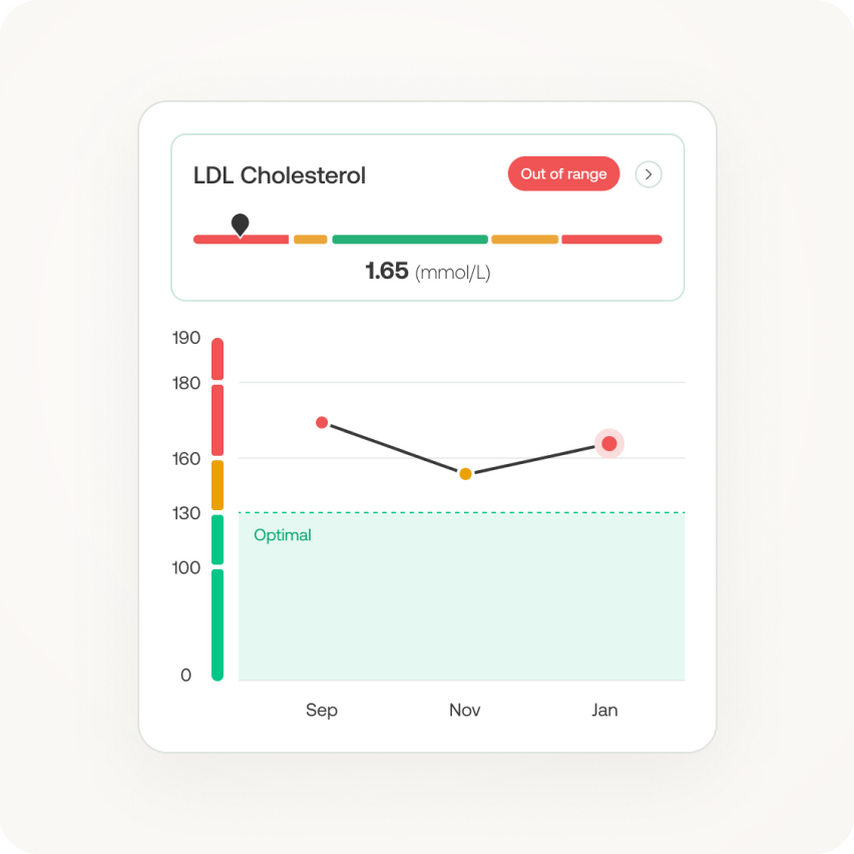
Known as “bad cholesterol,” LDL can build up in artery walls if elevated. High levels increase the chances of heart disease and plaque formation. This marker shows how effectively your body regulates lipid transport.
Triglycerides are fats used for energy. High levels can occur with poor diet, insulin resistance, or metabolic issues. Persistently high readings increase cardiovascular risk and may indicate problems with glucose handling.
Shows the balance between protective HDL and total cholesterol. A lower ratio suggests better cardiovascular protection, while a higher ratio indicates increased risk. It helps give context to individual cholesterol values.
Compares heart-protective HDL with artery-clogging LDL. Higher ratios are favourable for cardiovascular health. This marker supports a more complete understanding of lipid-related risk.
The main protein component of HDL particles. Higher levels are associated with better cholesterol clearance and reduced cardiovascular risk. Low ApoA1 can signal reduced protective function.
ApoB is found on LDL and other “atherogenic” particles. High levels strongly correlate with plaque formation and heart disease risk. It is considered one of the most accurate markers for assessing harmful cholesterol particles.
Shows the balance between harmful (ApoB) and protective (ApoA1) lipoproteins. A higher ratio indicates increased cardiovascular risk. This metric is often more informative than standard cholesterol tests alone.
A genetically influenced lipoprotein that increases cardiovascular and clotting risk when elevated. Levels do not typically change with lifestyle. Knowing your Lp(a) level helps identify inherited risk early.
A sensitive marker for inflammation in the body. Even mild elevation may indicate increased cardiovascular risk or ongoing inflammatory processes. It helps identify silent inflammation affecting long-term health.
An enzyme mainly found in the liver. Elevated ALT may indicate liver irritation, fatty liver, alcohol-related stress, or medication effects. Healthy levels suggest good liver cell stability.
A liver enzyme also present in muscle tissue. High levels may reflect liver stress, muscle injury, or inflammation. Interpreted alongside ALT for a clearer picture of liver health.
An enzyme related to the liver, bile ducts, and bones. High levels may indicate liver or gallbladder issues, or increased bone turnover. Low levels can occur with nutritional deficiencies.
A sensitive marker of liver stress and alcohol exposure. Elevated levels may indicate toxin load, fatty liver, or bile duct irritation. Useful for early detection of lifestyle-related liver changes.
A breakdown product of red blood cells processed by the liver. Elevated levels may cause jaundice or indicate impaired liver function or increased red blood cell turnover. Mild elevations can be harmless in some genetic conditions.
Measures the overall protein content in the blood, including albumin and globulins. Abnormal levels may indicate liver issues, immune activation, or nutritional imbalance. Helps assess overall metabolic and immune status.
The main protein produced by the liver. Low levels may point to inflammation, poor nutrition, or liver/kidney dysfunction. Normal levels support fluid balance and hormone transport.
A group of proteins involved in immunity and inflammation. High levels may reflect immune activation or chronic inflammation. Low levels may indicate immune or nutritional issues.
Shows the balance between albumin and globulins. An abnormal ratio may indicate inflammation, infection, liver dysfunction, or immune imbalance.
A waste product filtered by the kidneys. High levels may indicate dehydration, high protein intake, or impaired kidney function. Low levels may reflect liver issues or low protein intake.
A breakdown product of muscle metabolism. Elevated levels may signal reduced kidney filtration. Used together with eGFR for assessing kidney health.
A calculation showing how well your kidneys filter waste. Lower results indicate reduced kidney function. Important for detecting early kidney changes.
Shows your immediate fasting blood sugar level. High readings may suggest insulin resistance, prediabetes, or dietary imbalance. Useful for day-to-day glucose status.
Reflects your average blood sugar over the last 2–3 months. Higher levels indicate long-term glucose imbalance or risk of diabetes. More stable than a single glucose reading.
Shows how hard your body is working to regulate blood sugar. High fasting insulin often indicates insulin resistance, a key driver of metabolic dysfunction. Low levels may point to reduced insulin production.
The master regulator of thyroid function. High TSH typically indicates an underactive thyroid; low TSH suggests an overactive thyroid. Essential for understanding hormone balance.
One of the main thyroid hormones. Low FT4 suggests underactive thyroid function, while high levels may indicate overactivity. Interpreted alongside TSH for clarity.
The active form of thyroid hormone that drives metabolism. Low levels may cause fatigue, weight gain, and low mood. High levels may produce symptoms of thyroid overactivity.
Antibodies that signal autoimmune thyroid inflammation, such as Hashimoto’s disease. Elevated levels may predict future thyroid dysfunction even when hormones are normal.
Another autoimmune marker affecting thyroid tissue. Raised levels may indicate thyroid inflammation or autoimmune activity. This helps provide a detailed assessment of thyroid imbalance.
Shows the biologically active form of B12 used for energy, nerve function, and red blood cell production. Low levels can cause fatigue, tingling, poor concentration, and low mood.
Important for DNA synthesis, energy production, and red blood cell formation. Low levels may cause fatigue, low mood, and anaemia. Works closely with B12.
Essential for bone strength, immune function, hormone regulation, and mood. Low levels are extremely common and may contribute to fatigue and lowered immunity.
A mineral needed for muscle relaxation, nerve function, sleep quality, and stress response. Low magnesium can cause muscle cramps, fatigue, and poor recovery.
Important for immunity, skin health, hormones, and wound healing. Low levels may contribute to hair loss, low libido, and reduced immunity.
Required for bone health, nerve transmission, and muscle function. Abnormal levels may indicate hormonal imbalances, vitamin D issues, or parathyroid changes.
Reflects overall testosterone production. Low levels can affect energy, libido, mood, and muscle strength. High levels may indicate hormonal imbalance or PCOS in women.
Shows how much testosterone is biologically active and available to tissues. Often more meaningful than total testosterone alone. Low levels may cause symptoms even when total testosterone appears normal.
A protein that binds hormones such as testosterone and oestrogen. High SHBG means less free, active hormone; low SHBG may increase androgen effects. Helps interpret hormone balance more accurately.
The main form of oestrogen. Low levels may cause irregular cycles, low mood, or menopausal symptoms. High levels may relate to cycle phase, hormonal imbalance, or oestrogen dominance.
An adrenal hormone supporting energy, mood, and sex hormone production. Low levels may reflect chronic stress or adrenal fatigue; high levels may indicate androgen excess.
Your main stress hormone. High levels may contribute to anxiety, weight gain, and sleep disruption. Low levels may signal burnout or adrenal fatigue.
Controls ovulation and supports reproductive hormone production. Abnormal levels may indicate PCOS, menopause, or pituitary changes. Helps interpret fertility and cycle health.
Regulates ovarian function and egg development. High levels often occur in menopause; low levels may affect cycle regularity or fertility. Interpreted alongside LH and oestradiol.
A hormone involved in reproductive health and stress response. High prolactin may cause irregular cycles, low libido, or fertility issues. Levels may rise with stress or certain medications.
Measures circulating iron available for use. Low levels may contribute to fatigue, hair thinning, and low immunity. High levels may indicate overload or inflammation.
Shows how much capacity your blood has to transport iron. High TIBC often suggests iron deficiency. Low TIBC may signal inflammation or iron overload.
Indicates how much of the iron-transport protein (transferrin) is actually carrying iron. Low levels suggest deficiency; high levels may indicate excess iron.
Your body’s iron storage protein. Low ferritin is one of the most common causes of fatigue. High ferritin may signal inflammation or iron overload conditions.
The oxygen-carrying protein in red blood cells. Low levels can indicate anaemia, causing fatigue and breathlessness. High levels may suggest dehydration or increased oxygen demand.
Shows the proportion of blood made up of red blood cells. Low levels often indicate anaemia; high levels may suggest dehydration or increased red cell production.
Measures the number of red blood cells in circulation. Abnormal levels may indicate anaemia, nutrient deficiencies, or bone marrow changes.
Shows the average size of your red blood cells. High MCV may indicate B12 or folate deficiency; low MCV is common in iron deficiency.
Measures how much haemoglobin is in each red blood cell. Low levels are often seen in iron deficiency; high levels may relate to B12 or folate status.
Reflects immune system activity. High levels may indicate infection or inflammation; low levels may reflect immune suppression or nutrient deficiency.
Shows the number of platelets involved in clotting. High or low levels may indicate inflammation, infection, or bone marrow changes. Important for bleeding and clotting health.
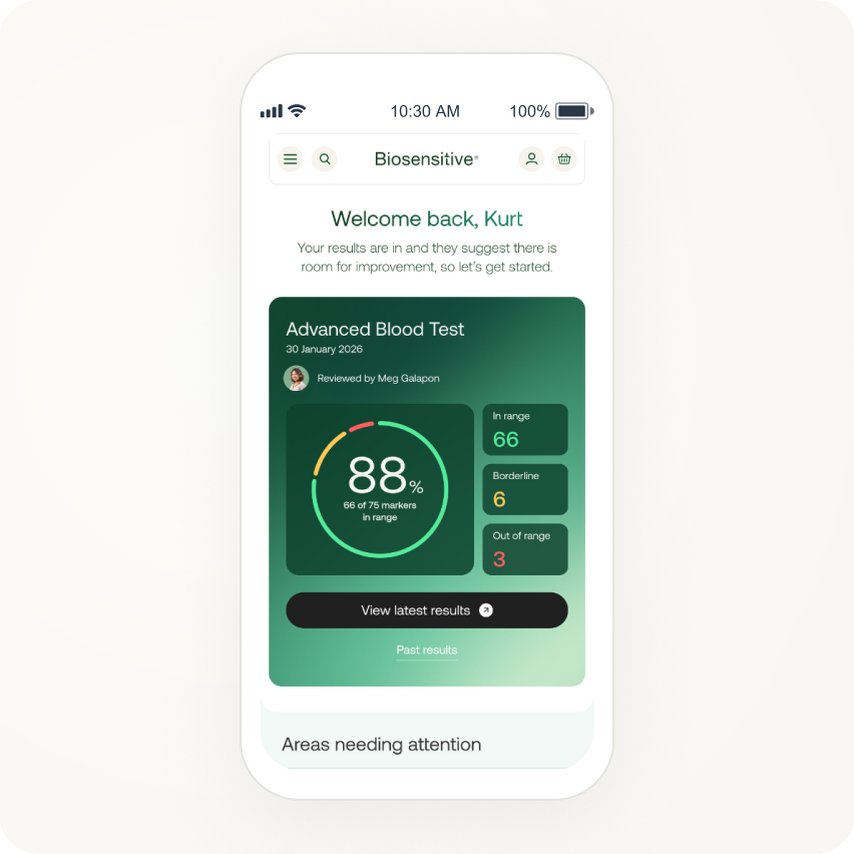
See how each group of biomarkers works together to give a deep view of your metabolism, hormones, cardiovascular and overall health.
Checks the fats and lipoproteins that drive cardiovascular risk, plaque build-up and metabolic health.
Screens for silent inflammation and early liver stress linked to diet, alcohol, medications and metabolic load.
Looks at blood proteins, hydration and kidney filtration to flag early kidney strain, inflammation or nutritional issues.
Checks the fats and lipoproteins that drive cardiovascular risk, plaque build-up and metabolic health.
Combines short- and long-term markers of glucose and insulin to assess insulin resistance, prediabetes and metabolic stress.
Explores thyroid hormones and antibodies to understand metabolism, energy, temperature regulation and autoimmune thyroid risk.
Checks iron availability, transport and storage to detect deficiency, overload and inflammation-related changes.
Looks at key micronutrients that support energy, immunity, mood, bone health and hormone balance.
Covers sex and stress hormones that drive mood, libido, muscle mass, cycle health and response to stress.
Assesses red and white blood cells and platelets for anaemia, infection, inflammation and overall blood health.
A simple three-step process to get clinically led insights into your health.
Order your Total Body Health Test and we will send your kit to you the following day. You will then be sent a link to book in your nurse visit if you have opted for this service.
You can choose either to have one of our nurses visit you at your home or workplace for a venous blood draw, or you can arrange the blood draw yourself. Around 98% of our patients choose to use our nurse service.
Once your sample is sent back to us using the prepaid envelope in your test kit, we will produce your results within 3-5 days. You will be provided with a doctors report based on your results.
If you have any other questions please reach out to us directly.
This test analyses 58 key biomarkers across hormones, thyroid function, inflammation, liver health, kidney function, blood sugar regulation, iron levels, vitamins, minerals and full blood count.
It gives one of the most complete health pictures available in a single blood draw.
Anyone wanting a deeper understanding of their health — whether you're experiencing symptoms (fatigue, low mood, weight changes, poor recovery, hormonal issues) or simply want a proactive check-in.
It’s also ideal for people monitoring long-term conditions or optimising performance, energy, and longevity.
Yes, fasting for 8–10 hours is recommended for the glucose, insulin and lipid markers.
Water is fine, but avoid food, supplements, and sugary drinks until after your sample is taken.
Morning collection is recommended, especially for hormones and cortisol, which have natural daily rhythms.
For women still having periods, hormone results are most interpretable if tested between day 2–5 of the menstrual cycle (unless instructed otherwise).
You can choose either:
Most results return within 3–5 working days after your sample reaches us.
If any biomarker is high or low, your report will flag it clearly and explain possible causes.
We also include practical steps you can take, covering nutrition, lifestyle, supplementation, and when medical follow-up may be appropriate.
If a result requires urgent attention, we’ll notify you.
Yes — these symptoms commonly link to issues in:
Certain supplements (iron, B12, folate, biotin, vitamin D, magnesium) can influence the biomarkers we measure.
If possible, avoid taking supplements on the morning of the test unless medically required.
Your cart is currently empty.
Start Shopping